China's Gen Z Turns Dead Malls Into Massive AR Battle Royale Arenas
Young Chinese gamers are transforming abandoned shopping centres into real-world AR battle royale experiences, blending PUBG-style gameplay with urban exploration.
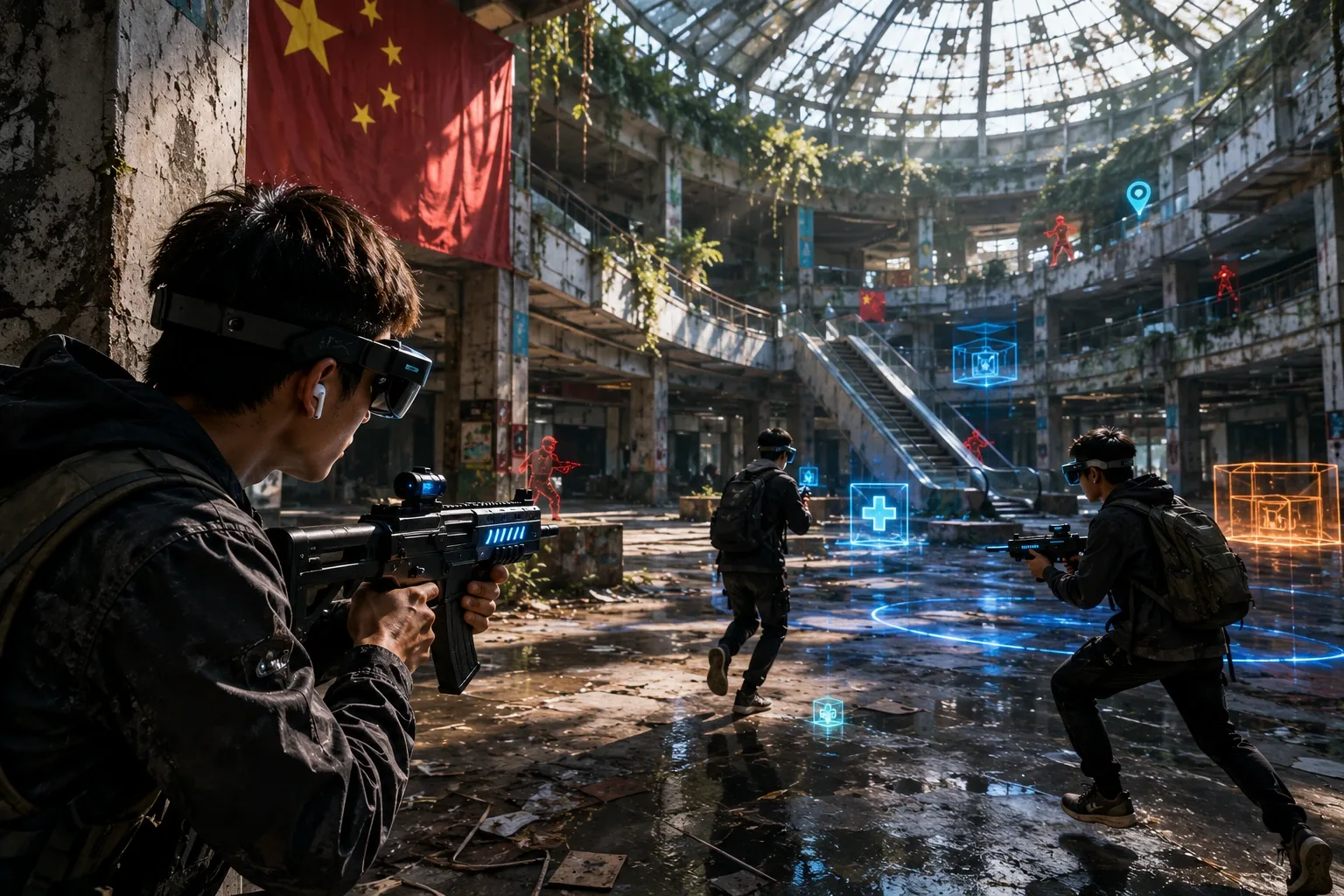
Right, this is absolutely brilliant. Gen Z in China has taken one look at empty shopping malls – you know, those massive concrete shells left behind by failed retail ventures – and thought 'reckon we could turn that into a proper battle royale arena.' And they've gone and done it using augmented reality tech. It's like PUBG crossed with urban exploration, and it's spreading like wildfire across Chinese cities.
How It Actually Works
Players kit themselves out with AR-capable devices – mostly smartphones and AR glasses from brands like Xreal – then rock up to these abandoned malls ready for a scrap. The games overlay digital elements onto the real physical spaces: virtual weapons, power-ups, health bars, the lot. But here's the clever bit – you're actually running through real corridors, hiding behind actual pillars, and navigating genuine escalators. It's physical cardio meets digital combat, and apparently it's absolutely knackering.
The game mechanics borrow heavily from battle royale titles, with shrinking play zones forcing players into smaller areas of the mall as matches progress. Teams communicate via voice chat, coordinate strategies around real architectural features, and the whole thing plays out in these genuinely atmospheric abandoned spaces. Some organisers have even started setting up checkpoints and safe zones using physical markers that interact with the AR systems.
Why This Matters For AR's Future
This grassroots movement is doing something that big tech companies have been throwing billions at – making AR genuinely compelling. While Meta's been pushing Quest 3 mixed reality features and Snap's been restructuring their AR division, these kids have just... solved the use case problem. They've found a killer app that makes people want to strap on AR gear and actually go outside.
The beauty of it is the low barrier to entry. You don't need expensive kit – a decent smartphone and some open-source AR software gets you in the game. The abandoned malls provide free venues with genuinely interesting level design that no game developer could afford to build. It's resourceful, it's creative, and it shows what happens when you let gaming culture collide with real-world spaces without corporate oversight mucking about.
The Bigger Picture
What's fascinating is how this represents a completely different approach to spatial computing than what we're seeing from Western companies flogging Apple Vision Pros for productivity bollocks. This is AR as social experience, as sport, as genuine youth culture. It's messy, it's probably not entirely legal in terms of trespassing, and it's absolutely the kind of organic adoption that suggests AR might actually have legs beyond being a glorified heads-up display.
Course, there are questions about safety – people sprinting through derelict buildings isn't exactly Health & Safety approved. But as a proof of concept for location-based AR gaming that isn't just Pokémon Go? This is proper next-level stuff. If someone can package this experience into something more accessible and safer, while keeping that raw energy, we might finally see AR break into the mainstream properly. Keep an eye on this space – I reckon we'll be seeing similar concepts pop up in the West before long.
Join the discussion below. Sign in to leave a comment or reply.
You need to be signed in before you can leave a comment or reply to the discussion.
Keep exploring
Explore topics →