PICO OS 6 and "Project Swan" Official Reveal at GDC 2026
ByteDance are showcasing their PICO "Project Swan" device and PICO OS 6 at GDC 2026
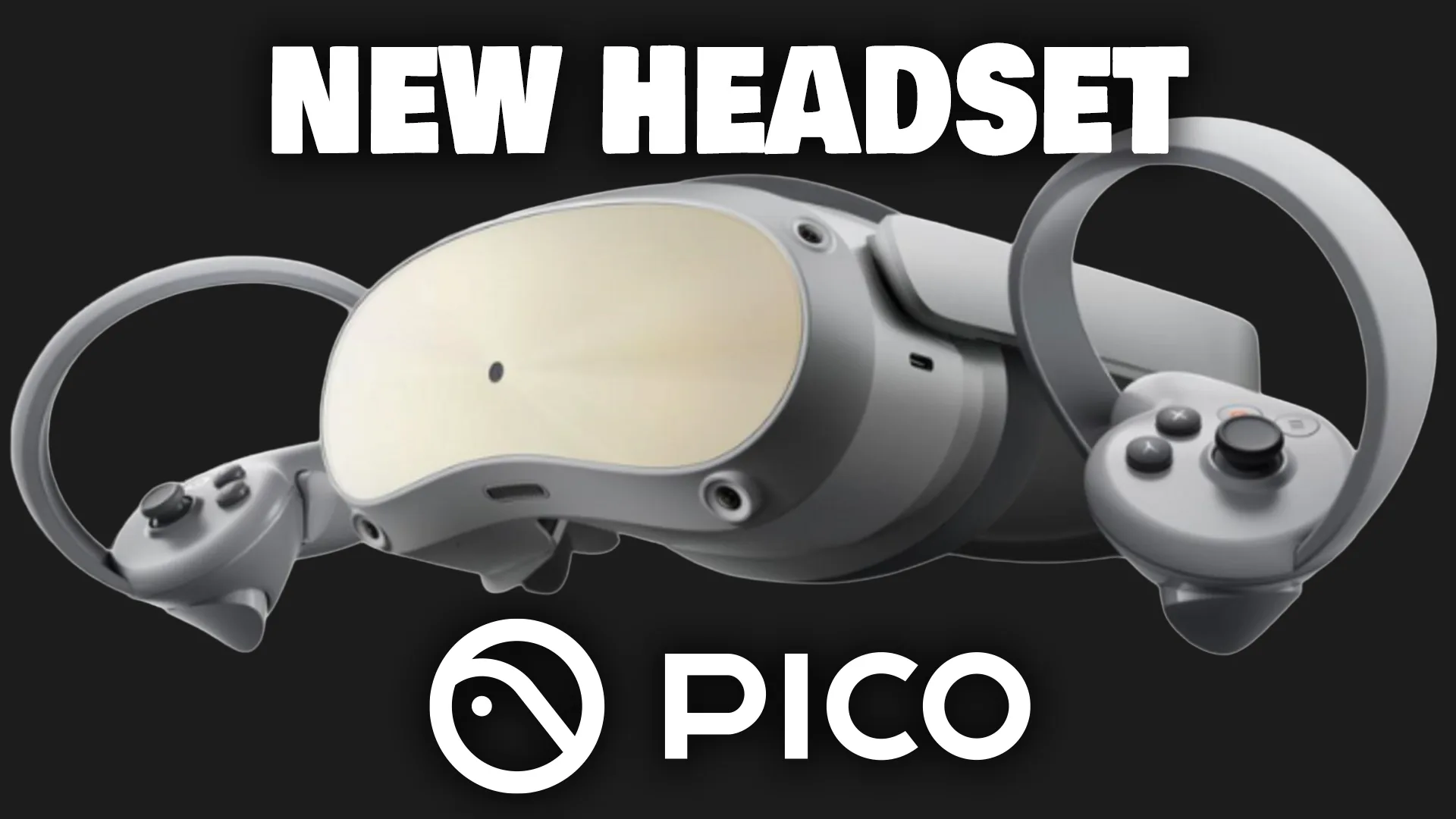
PICO “Project Swan” Revealed: ByteDance’s True Spatial Computing Platform Is Finally Emerging
What was once rumored as a Vision Pro competitor now has a name — and it’s much bigger than just a headset.
For the past two years, reports have suggested that ByteDance’s PICO division was working on a high-end mixed reality headset designed to compete directly with Apple’s Vision Pro. Early leaks pointed to 4K micro-OLED displays and a dedicated passthrough processing chip similar to Apple’s R1, indicating a major shift away from traditional standalone VR into true spatial computing.
Now, a newly listed developer session at GDC appears to confirm that direction — and reveals the platform behind it: Project Swan.
The session, titled “Bring Your Apps and Games to General Spatial Computing with Project Swan”, describes Swan as PICO’s flagship device for general spatial computing. Rather than focusing purely on VR gaming, the platform is designed around shared environments where applications, games, and tools run simultaneously in the same physical space.
A Shift Beyond Traditional VR
Previous PICO headsets, including the Pico 4 and Pico 4 Ultra, largely followed the Quest model — standalone VR with mixed reality features layered on top. Project Swan represents something fundamentally different.
According to the session description, Swan introduces a new paradigm where a primary experience can run alongside companion apps inside a shared spatial environment. In practice, this suggests a system closer to Apple’s visionOS approach: multiple persistent windows, multitasking apps, and interactive spatial tools existing together rather than isolated fullscreen experiences.
This aligns closely with earlier reports that ByteDance was building a headset intended to compete in the same category as Vision Pro rather than traditional gaming VR devices.
Developer Focus First
The GDC talk heavily emphasizes development workflows, not hardware specifications — a sign that PICO is positioning Swan as a platform rather than simply a product.
Developers will be able to adapt 2D, PC, and XR applications using Unity, Unreal, and PICO Spatial tools, with support for “shared-space gameplay” where apps coexist within the same environment. The platform also features multimodal interaction systems and upgraded graphics capabilities designed for persistent spatial interfaces.
In other words, PICO appears to be building an operating system ecosystem first, and a headset second.
Connecting The Dots With Previous Leaks
The Project Swan reveal strongly matches earlier reports about PICO’s next-generation device. ByteDance executives previously described a headset featuring custom micro-OLED panels around 4000 PPI and a dedicated real-time passthrough chip capable of delivering frames in under 12 milliseconds — specifications clearly aimed at high-quality mixed reality rather than pure VR immersion.
Separate reports also suggested PICO was working on an ultralight goggle-style headset with an external compute puck, mirroring an industry trend also seen in upcoming Meta hardware.
While PICO has not explicitly confirmed Swan’s hardware form factor, the platform’s focus on spatial multitasking strongly implies a mixed reality-first device rather than a gaming-centric headset.
The Beginning Of The Spatial Computing Competition
Project Swan marks a major strategic shift for PICO. Instead of competing directly with Quest in the mid-range VR gaming market, the company appears to be targeting the next category entirely — general spatial computing.
If the earlier hardware leaks prove accurate, Swan could become one of the first serious non-Apple attempts at a full productivity-focused spatial operating system.
With Meta working on lightweight compute-puck headsets and Apple expanding visionOS, the industry is rapidly moving beyond standalone VR toward wearable computing platforms.
PICO’s Swan may be ByteDance’s entry into that next phase — not just a new headset, but a new category of device.
Join the discussion below. Sign in to leave a comment or reply.
You need to be signed in before you can leave a comment or reply to the discussion.
Keep exploring
Explore topics →