6 Quest Learning Games That Make Education Fun in VR
From nursing simulations to archery training, these Quest titles prove educational VR can be genuinely engaging for learners of all ages.
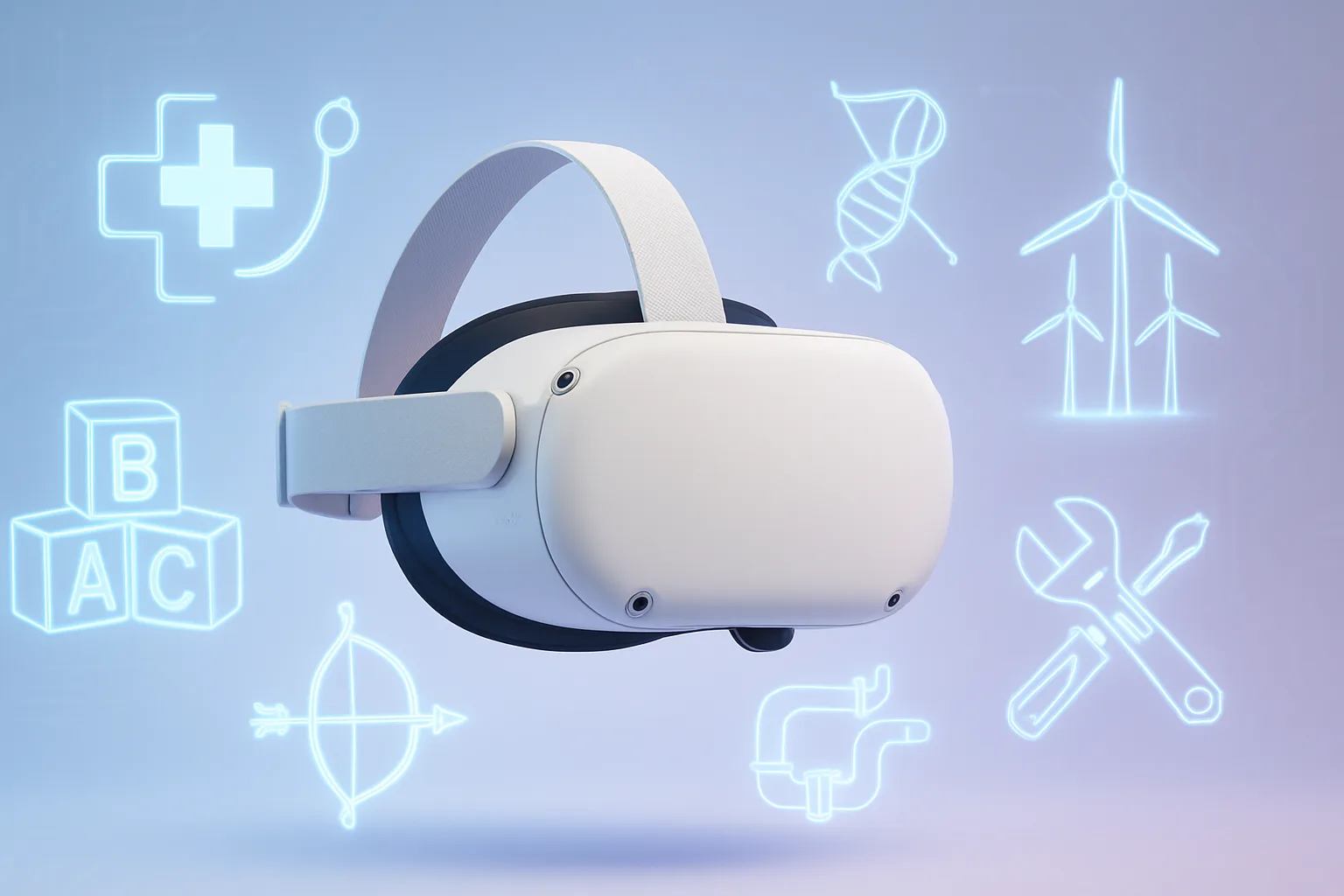
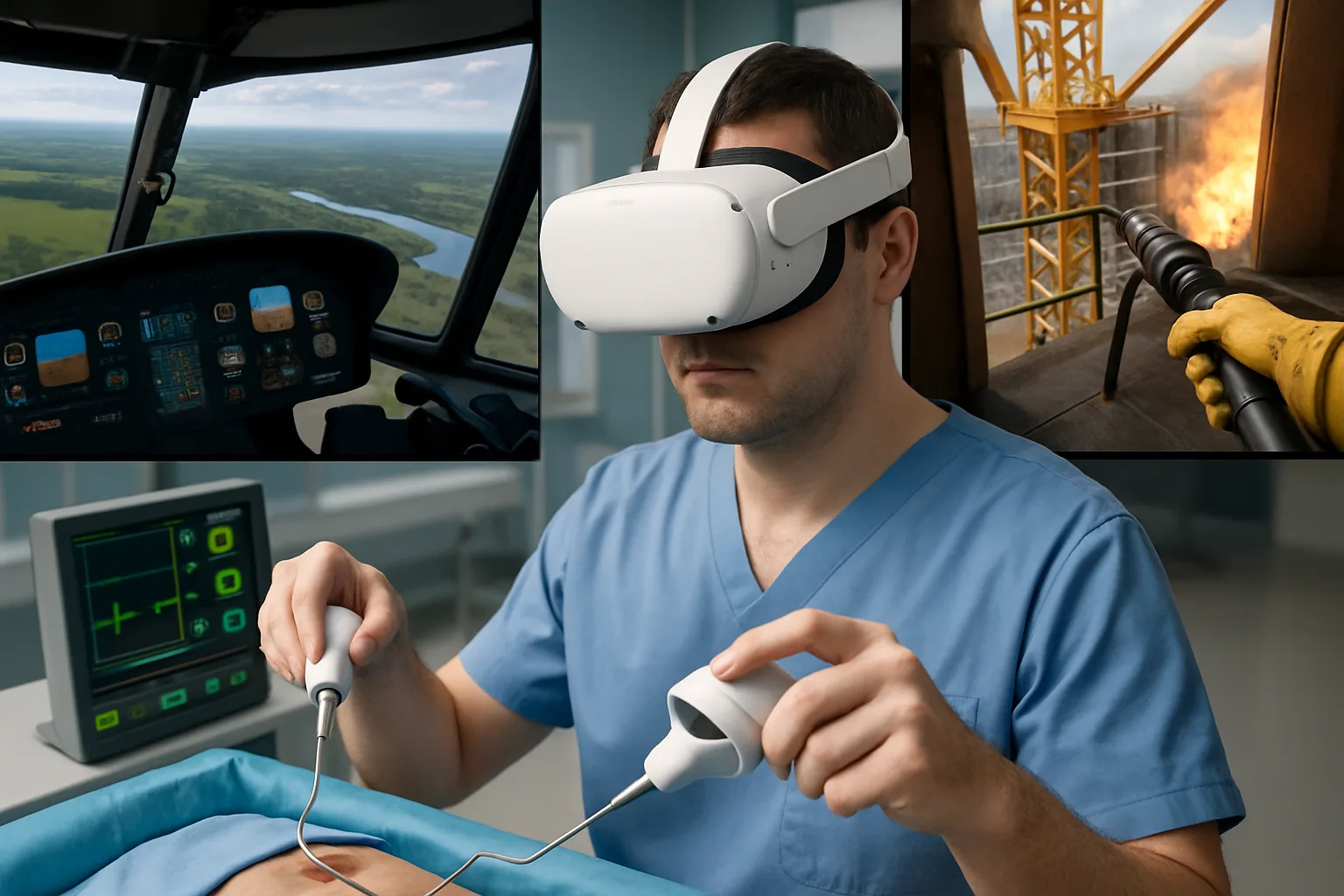
Right, let's be honest—educational games have a reputation for being about as exciting as watching paint dry. But VR changes the game entirely. When you're actually doing things rather than clicking through slides, learning suddenly becomes something you want to do, not something you have to endure. The Quest library has quietly built up a proper collection of educational titles that don't feel like homework, and I've rounded up six that actually deliver on making learning engaging.
Whether you're looking to pick up practical skills, explore science concepts hands-on, or help younger learners develop new abilities, these titles prove that educational VR isn't just a gimmick—it's genuinely effective. Let's dive in.
1. VR Nurse Sim by Simlogic – Medical Training Made Accessible
Starting with something genuinely practical, VR Nurse Sim by Simlogic is a proper nursing simulation that puts you in realistic medical scenarios. This isn't a game pretending to teach you something—it's an actual training tool that's been adapted for Quest. You'll practice patient care procedures, learn medical terminology, and handle emergency situations without the pressure of working on real people.
What makes this brilliant for education is the consequence-free environment. You can make mistakes, learn from them, and repeat procedures until they're second nature. It's particularly useful for nursing students or anyone considering a healthcare career, giving you a taste of what the job actually involves. The scenarios are detailed enough to be educational but accessible enough that you don't need prior medical knowledge to get started.
2. vArcher – Archery Training Without the Range Fees
vArcher teaches you proper archery technique in VR, and it's surprisingly legitimate as a training tool. You'll learn stance, draw technique, aiming, and breathing control—all the fundamentals that translate to real-world archery. The physics feel spot-on, and the progression system takes you from basic targets to more challenging scenarios as your skills develop.
This one's brilliant because archery ranges aren't exactly on every street corner, and equipment costs add up quickly. vArcher gives you unlimited practice time without worrying about arrow costs or range availability. It's particularly good for younger learners developing hand-eye coordination and focus, but adults looking to pick up a new skill will find it just as valuable.
3. Wind Power Energy – ContentsDA Science Experiment
Science experiments in VR are where the medium really shines, and Wind Power Energy - ContentsDA Science Experiment demonstrates why. This title lets you explore renewable energy concepts hands-on, building and experimenting with wind turbines to understand how they generate electricity. You'll manipulate variables, observe results, and learn the physics behind sustainable energy without needing an actual turbine or engineering lab.
What's clever here is how it makes abstract concepts tangible. Energy conversion, efficiency, and environmental impact become things you can see and interact with rather than theoretical ideas in a textbook. It's ideal for secondary school students studying physics or environmental science, but honestly, anyone curious about renewable energy will find it fascinating.
4. Travel The Words! – Language Learning Through Exploration
Travel The Words! takes a puzzle-based approach to language learning, combining word games with exploration mechanics. You're solving language puzzles to progress through environments, which keeps your brain engaged on multiple levels. It's not going to replace a proper language course, but as a supplementary tool for vocabulary building and pattern recognition, it's genuinely effective.
The strength here is making language learning active rather than passive. You're not just memorizing flashcards—you're using words in context to solve problems. It works particularly well for younger learners or anyone who finds traditional language learning methods tedious. The VR element adds immersion that keeps you engaged longer than you would be with a mobile app.
5. Animal Anatomy XR – Biology Made Interactive
Animal Anatomy XR brings biology lessons into three dimensions, letting you explore animal anatomy in ways that textbooks simply can't match. You can examine skeletal structures, organ systems, and physiological processes from every angle, scaling them up to room size or down to inspect fine details. It's like having a biology lab where the specimens are perfect 3D models you can manipulate at will.
This is particularly brilliant for visual learners who struggle with flat diagrams. Being able to walk around a heart or pull apart a skeletal system piece by piece makes anatomical relationships immediately clear. It's suitable for anyone from secondary school students studying biology to university-level anatomy courses, or just curious folks who want to understand how bodies work.
6. Plumbing Repair VR – Practical Skills Training
Plumbing Repair VR teaches you actual plumbing skills in a risk-free environment. You'll learn to identify common plumbing problems, select the right tools, and perform repairs following proper procedures. It's not going to turn you into a certified plumber overnight, but it absolutely will give you the confidence and knowledge to tackle basic home repairs.
What makes this valuable is the practical, real-world application. These aren't abstract concepts—they're skills that can save you money and make you more self-sufficient. The step-by-step instruction is clear, and making mistakes doesn't cost you a flooded bathroom. It's perfect for homeowners, DIY enthusiasts, or anyone in vocational training programs.
Choosing the Right Educational VR Experience
When picking educational VR titles, think about learning style and goals. Hands-on learners benefit most from simulation-based experiences like the nursing and plumbing titles. Visual learners will get more from anatomical exploration and science experiments. And if engagement is the main challenge, gamified approaches like the language puzzles work brilliantly.
The beauty of educational VR on Quest is the accessibility—no expensive equipment beyond the headset itself, no lab setup, no range fees or material costs. You can fail safely, repeat endlessly, and learn at your own pace. That's genuinely transformative for education.
Final Thoughts
Educational VR has moved well beyond novelty territory. These six Quest titles demonstrate that learning in VR can be engaging, effective, and genuinely useful. Whether you're developing professional skills, exploring academic subjects, or just picking up new hobbies, VR offers something traditional methods can't match—the ability to practice, experiment, and learn through doing rather than just watching or reading.
The Quest platform makes this accessible to anyone, and the variety of educational content continues to grow. If you've been skeptical about whether VR has practical applications beyond gaming, these titles will change your mind. Education in VR isn't the future—it's already here, and it actually works.
Join the discussion below. Sign in to leave a comment or reply.
You need to be signed in before you can leave a comment or reply to the discussion.
Keep exploring
Explore topics →